Showing posts with label 618.928-Sensory Integration Dysfunction. Show all posts
Showing posts with label 618.928-Sensory Integration Dysfunction. Show all posts
Friday, February 27, 2026
Marley’s Pride (Complete read-aloud for National Day of Reading)
To commemorate the National Day of Reading on Feb. 27, 2026, here is a complete reading of Marley’s Pride by Joëlle Retener with illustrations by DeAnn Wiley. I am reading this book with permission by the publisher, Barefoot Books. Marley is going to their first Pride parade with their grandparent, Zaza, who is being honored for their work supporting the transgender community. Marley has sensory sensitivities and is worried about the noise and large crowds, but wants to go in order to support Zaza.
https://youtu.be/WQyhCqdpAJY

Tuesday, December 27, 2016
‘The Autistic Gourmand,’ new blog

Eating is easily the most difficult sensory task for this woman on the autism spectrum. Risking unfamiliar tastes and textures, it takes time and considerable fortitude at times for me to get used to new foods.
The experience of eating — already fraught with sensory/tactile challenges — is further burdened by past experiences and prevalent social attitudes.
My new blog, The Autistic Gourmand, explores social “norms” and challenges related to consumption of food. Several writings originally posted here have been migrated or reprinted on the new subject-specific blog.
Saturday, October 22, 2016
Autism and socializing: ‘Armond Goes to a Party’

These numerous conversations — for me all playing at equal volume — are further compounded by the “soundtrack of life” — air conditioning or heater, utensils clanking against dishes, the movement of people through a room.
Wednesday, April 13, 2016
Sunglasses in church
I am a member of the last “invisible generation” of people on the autism spectrum, who missed out on diagnosis in childhood because of at-the-time rigid criteria.
Church is largely a positive experience among people who accept me as I am. One glaring exception concerns a Sunday when my husband Jonathan was approached after the service by a man whom neither of us had encountered at church before. I decided to write about, to share, this experience with a group I encountered on Facebook: a supportive community for people touched by autism, who also have in-common the religious affiliation of which I am part.
To foster understanding, I am sharing it here but want to make clear that I am not singling out a congregation or group. Unwanted criticism can come from any source, in any situation. This just happened to take place at church.
Church is largely a positive experience among people who accept me as I am. One glaring exception concerns a Sunday when my husband Jonathan was approached after the service by a man whom neither of us had encountered at church before. I decided to write about, to share, this experience with a group I encountered on Facebook: a supportive community for people touched by autism, who also have in-common the religious affiliation of which I am part.
To foster understanding, I am sharing it here but want to make clear that I am not singling out a congregation or group. Unwanted criticism can come from any source, in any situation. This just happened to take place at church.
Sunday, December 14, 2014
‘Food Chaining’ by Cheryl Fraker, et al.

Eating is easily the most difficult sensory task I face. In childhood, I easily fit the profile of a “problem eater,” as described in this book. I accepted few foods, had strong adverse reactions that included gagging and was reluctant to even touch new foods.
My difficulties didn’t have the benefit of a book like this, however. Instead, adults labeled me “picky,” “spoiled” and “bad” because I could not eat what was served to me.
Saturday, July 19, 2014
Validated by the fact that ‘Food Chaining’ is a thing
Eating continues to be the most difficult sensory task for this woman on the autism spectrum.
To expand my palate, my husband and I take an approach very similar to the “food chaining” discussed by Primeau at Aspergers101.
It takes time for me to get used to an unfamiliar food, and it requires considerable fortitude to be willing to try new things. An experience that is already fraught with challenges on the basis of unfamiliar or unpleasant tastes or textures is further burdened by past experiences and prevalent social attitudes.
Wednesday, July 9, 2014
‘The Sensory Child Gets Organized’
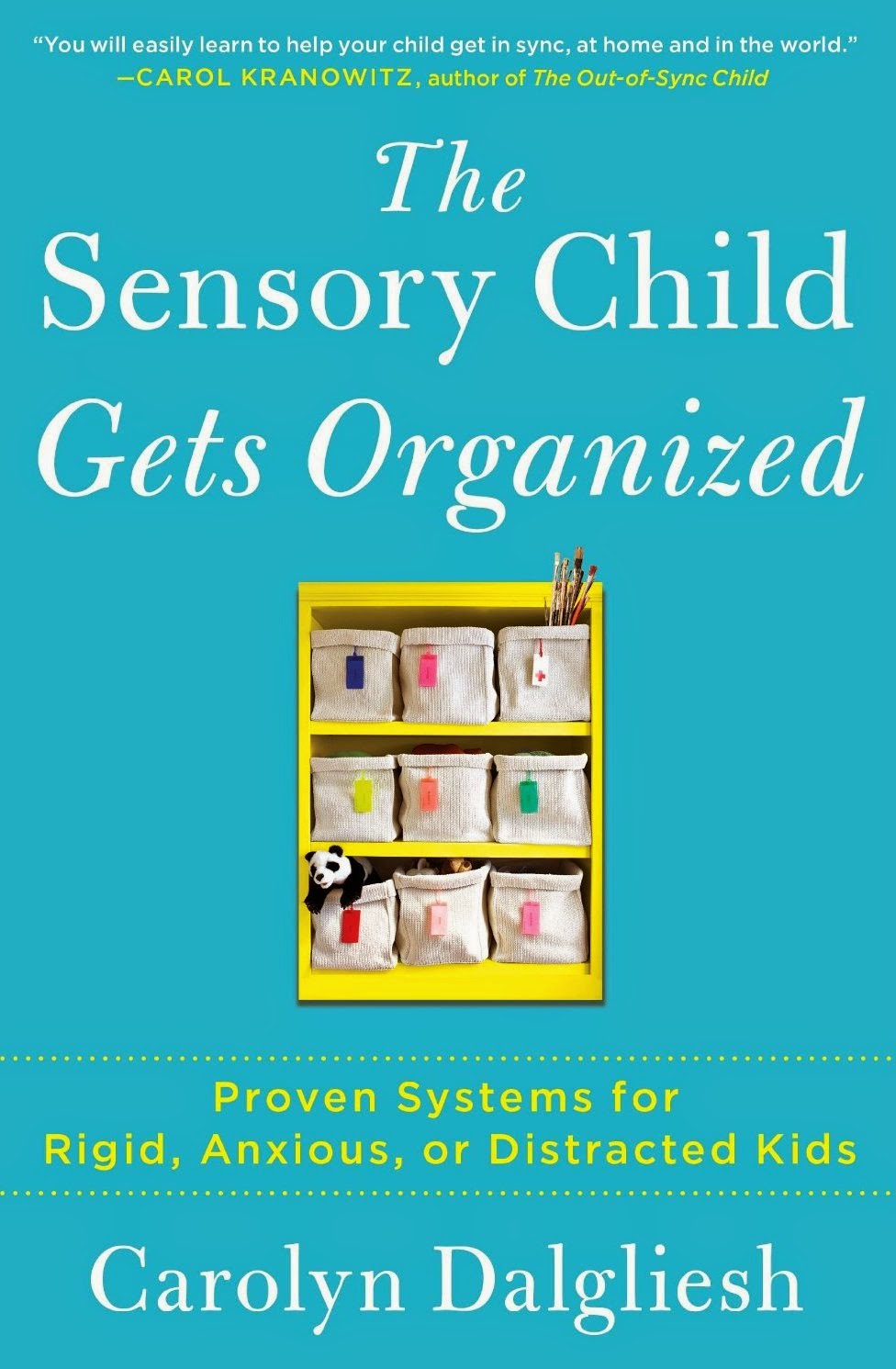
Dalgliesh emphasizes three main questions: 1. How can I break this down into a more manageable task? 2. How can I eliminate some of the (external and/or internal) stimuli that may be distracting? and 3. What visual aid can I create to support the task at hand?
Friday, March 22, 2013
Pantry Basics class at Ashland Food Co-op
 |
| AFC Education Coordinator Mary Shaw taught a Pantry Basics class on March 20 |
Friday, February 22, 2008
'Icrebreaker' speech for Toastmasters
I gave my "icebreaker" speech last night for Toastmasters! It went very well! The group gave me good feedback about the strengths I already have and some areas for improvement. I'm looking forward to giving my next speech.
Last nght's speech was the first one in the workbook. The objective was to tell a story about yourself so I talked about my experience taking English tea at the local inn and how I was able to eat part of the sandwiches even though swallowing that type of food had been so very difficult in the past.
Originally posted to DailyStrength.org
Sunday, February 17, 2008
Sunglasses help with eyestrain
I've started attending services among a Unitarian Universalist community that meets at a local senior center. At the first two services I attended, I noticed that a couple of things seemed to be going on simultaneously: a) my eyes hurt or felt tired and b) the room is very bright. Not only was direct sunlight coming through the front windows but the interior lighting was on full-force overhead.
I know that light that would ordinarily not bother me can potentially cause me trouble when I am physically fatigued or when I am under emotional strain but this service was in the mid-morning and I'd had plenty of sleep and was feeling pretty good about life.
I've had problems for years with my eyes constantly feeling fatigued. I frequently rub my eyes and I've seen videos of me where I'm doing these weird long blinks. So when I learned about AS and about the sensory issues that can go with it, I started trying to pay attention to certain things -- potential causes and effects.
Last week during services, I put my sunglasses back on and this morning I left them on entirely. My eyes felt a lot better with the sunglasses on. So I plan to reserve as an option my wearing sunglasses indoors when light is too much for me.
People who accept me will accept this about me as well, and I continually remind myself that there ARE people in my life who accept me as I am -- that I am no longer back in grade school.
Some other sensory issues that I deal with include a fear response to a very specific sound. It is really very strange how strong my reaction can be and how pervasive these reactions.
My husband has suggested that I try to figure out the "why" and here are my observations so far. There may be a correlation between the presence of my fear response and unexpectedness of the sound. This will bear further observation.
My fear response also seems to be worse when the sound is louder and more intense. Somehow I just can't get "used" to this sound.
Like many with AS, I tend toward vigilant focus on nearly all out-of-the-ordinary sounds but the fear response I have to the one specific sound is a very different experience. I recently read an insightful book by Temple Grandin in which she said that the fear response (fight or flight) and the vigilant response with which an animal evaluates its surroundings come from two different areas of the brain. It was very interesting reading.
Taste/food texture is also an issue with me, one that my husband and I have been working on together for years and I think that I am so much better than when I was a child. There were certain foods that caused me to gag the moment I put them in my mouth and now, at least, I can manage a few bites before I have to set the food aside because the taste is unpleasant to me.
My husband recommends meditation, which I try to do a little each day -- even if it's just focused breathing wherever I happen to be. We have a room in our house that is devoted to spiritual practice but I don't necessarily use it every time. Maybe I should because then it would be part of an established daily routine. Besides, I love our meditation room but I also love the rest of the house.
Originally posted to DailyStrength.org
I know that light that would ordinarily not bother me can potentially cause me trouble when I am physically fatigued or when I am under emotional strain but this service was in the mid-morning and I'd had plenty of sleep and was feeling pretty good about life.
I've had problems for years with my eyes constantly feeling fatigued. I frequently rub my eyes and I've seen videos of me where I'm doing these weird long blinks. So when I learned about AS and about the sensory issues that can go with it, I started trying to pay attention to certain things -- potential causes and effects.
Last week during services, I put my sunglasses back on and this morning I left them on entirely. My eyes felt a lot better with the sunglasses on. So I plan to reserve as an option my wearing sunglasses indoors when light is too much for me.
People who accept me will accept this about me as well, and I continually remind myself that there ARE people in my life who accept me as I am -- that I am no longer back in grade school.
Some other sensory issues that I deal with include a fear response to a very specific sound. It is really very strange how strong my reaction can be and how pervasive these reactions.
My husband has suggested that I try to figure out the "why" and here are my observations so far. There may be a correlation between the presence of my fear response and unexpectedness of the sound. This will bear further observation.
My fear response also seems to be worse when the sound is louder and more intense. Somehow I just can't get "used" to this sound.
Like many with AS, I tend toward vigilant focus on nearly all out-of-the-ordinary sounds but the fear response I have to the one specific sound is a very different experience. I recently read an insightful book by Temple Grandin in which she said that the fear response (fight or flight) and the vigilant response with which an animal evaluates its surroundings come from two different areas of the brain. It was very interesting reading.
Taste/food texture is also an issue with me, one that my husband and I have been working on together for years and I think that I am so much better than when I was a child. There were certain foods that caused me to gag the moment I put them in my mouth and now, at least, I can manage a few bites before I have to set the food aside because the taste is unpleasant to me.
My husband recommends meditation, which I try to do a little each day -- even if it's just focused breathing wherever I happen to be. We have a room in our house that is devoted to spiritual practice but I don't necessarily use it every time. Maybe I should because then it would be part of an established daily routine. Besides, I love our meditation room but I also love the rest of the house.
Originally posted to DailyStrength.org
Subscribe to:
Posts (Atom)